When homeowners visit Fetcharate.com they may be surprised to find out that they may qualify for a new home refinance plan that will lower their mortgage to astonishingly low rates.
Millions of smart homeowners have taken advantage of this brilliant government program called the Home Affordable Refinance Plan (HARP) and have reduced their monthly payments by as much as $4,264 each year.* This program, designed to help just about any homeowner take advantage of surprisingly low rates, has banks on the edge - we wouldn't be surprised if most banks hope you never learn about this program.
The government has announced that this program will expire in 2016 and is making a final push urging homeowners to take advantage of this program. Most homeowners will qualify for this program and the process is very simply. If you want to lower you mortgage payments, pay off your mortgage faster or get some extra needed cash out, it's vital you act now.
The government program is set to expire in 2016, so it's vital to act fast. HARP is a free government program and there is no cost & no obligation to see if you qualify. See if you qualify »

A Stimulus Plan for American Homeowners

HARP was designed so that the typical homeowners can qualify for low rates, and if you owe less than $625,000 on your home, the chances of qualifying could be very high. The government wants banks to cut rates and allow the typical homeowner to take advantage of those rates which acts as a true stimulus plan for the middle class - This puts more money in your pocket and boosts the economy.
But banks do not want you to know about this program because:
  • This program makes it easy for just about any homeowner to qualify for low rates
  • You can shop multiple lenders, you are not limited to your current lender's rates
Not a great deal for the banks because banks rather keep you in a higher rate than the low rates this program offers, but great for the typical homeowner and the middle class. Here is what we love about this program:
  • The average monthly savings is $355/mo.*
  • In addition to savings, you can pay off your home faster.
  • Homeowners can take extra cash for anything they want like paying off debt, home improvements, going on vacation, or an emergency cash fund.
Over 3 millions homeowners have taken advantage of HARP, but sadly, there are millions of homeowners that feel HARP is too good to be true. Luckily, there is NO COST to see if you are eligible and work out your savings. See It Instantly Online »

So How Do You Find These Low Rates?

To help homeowners find low rates quickly, Fetcharate's free service helps homeowners easily connect with lenders specifically matched to their needs. In just a few minutes, any borrower could get a side-by-side rate comparison from multiple lenders and find out what loan offers they may qualify for. The service works with lenders throughout the country to help homeowners locate the best match for their specific needs.
When you consider that Fetcharate's service is free, there are no obligations, and it only takes minutes to complete, the decision seems pretty simple. Using Fetcharate you'll get up to five competing loan offers by filling out 1 simple form.
Find and compare astonishing low mortgage rates.
Fetcharate is one of the country's largest and most respected mortgage refinance comparison shopping websites. They are currently connecting smart homeowners like yourself with multiple lender offers to find competitive mortgage rates.
With Fetcharate.com, there's no obligation and service is fast and easy. It takes less than two minutes, and comparing rates is 100% free. You have nothing to lose!

References:
  • http://www.whitehouse.gov/refi
  • http://www.fanniemae.com/resources/file/aboutus/media/HARP-Research-Report-030613.pdf
  • http://www.whitehouse.gov/refi&http://www.forbes.com/pictures/el45fjjej/six-simple-ways-to-pay-off-your-mortgage-faster-60/
  • http://www.freddiemac.com/finance/pdf/RefiReport2013Q3

iPhone 7 Will Continue With the iPhone 6s Colour Variants: Report

Highlights

  • New leak suggests iPhone 7 will have same colour variants as iPhone 6s
  • iPhone 7 is pegged to have most changes on internal hardware front
  • The smartphone is also tipped to sport a dual camera setup
As the launch of iPhone 7 approaches, rumours and leaks surrounding the next iteration of world's most popular lineup of smartphones are coming from all possible directions. One such leak that came out recently said that the smartphone will ship with a new colour variant 'Space Black' and will ditch the current variant 'Space Grey'. The latest leak however suggests that this may not be the case after all.
A new image leaked by MacityNet suggests that the upcoming iPhone will feature all the current colour variants as the iPhone 6s, that is, Silver, Space Gray, Gold, and Rose Gold.
The iPhone 7 is expected to come with very few changes on the design level, and focus is expected to be hardware. The most notable rumours regarding the smartphone so far include the expected dual camera setup on the iPhone 7 Plus, and the possible removal of the 3.5mm headphone jack.
Some of the other rumours have suggested that the iPhone 7 might see a shift in antenna bands to the edges of the smartphone, and the large variant has also been suggested to don a Smart Connector apart from a dual camera setup. The phone's storage options are now expected to start from 32GB rather than 16GB earlier and are expected to extend till 256GB.
One rumour that has also been doing rounds is that Apple will launch the next iPhone in three variants - iPhone 7, iPhone 7 Plus, and iPhone 7 Pro.
Download the Gadgets 360 app for Android and iOS to stay up to date with the latest tech news, product reviews, and exclusive deals on the popular mobiles.

sorce link 

ORNL 3D printed heatsink  
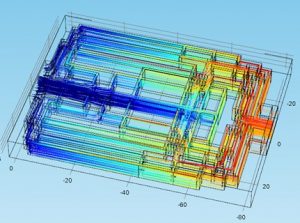
False-colour image of a heatsink genetically designed to cool a module dissipating 2kW
The conclusion comes from two linked projects at Oak Ridge National Laboratory and the University of Tennessee Knoxville:
One proves printed aluminium can at least equal and sometimes better the thermal conductivity of standard heatsink aluminium.
The second has developed genetic algorithms that make use of the freedom of shape available from 3D printing to design heatsinks that fit in the same space as their conventional cousins but work better.
In the thermal conductivity case, a conventional heatsink material (‘6061’, aluminium with <1% Si and 1.5% Mg) was compared with one printed by US firm Linear Mold AMS using an alloy developed for direct metal laser scintering (DMLS) which includes 10% Si and 0.5% Mg, according to ORNL.
At room temperature, the 6061 alloy had a thermal conductivity of 180W/mK, compared to 110W/mK for the printed heatsink – a lower figure here means worse conductivity and therefore a worse heatsink.
At higher temperatures, they both varied in a roughly linear fashion, converging to 170WmK at 220°C.
Heat-treating them both at 300°C, then returning then to room temperature, resulted in structural changes which improved thermal conductivity in both materials.
While the 6061 heatink became a few W/mK better, the printed one was far improved – rising permanently to just under 200W/mK.
For future simulation, the research team has created accurate theoretical models for both the printed alloy and 6061.
As an aside, the most common aluminium alloy for DMLS 3D printing is ‘AlSi10Mg’, which is very similar to the alloy ORNL describes, but with 0.25-0.45% of magnesium.
As printed this achieves 103+/-5W/mK along printed layers and 119+/-5W/mK through printed layers. Standard post-printing conditioning for AlSi10Mg is heating to 300°C for two hours, after which its thermal conductivity rises to 173+/-10W/mK in all directions.
A second standard alloy for extruded heatsinks, called 6063, delivers 190-210W/mK in copper-free form – copper increases thermal resistance in aluminium.
And as a further aside, diamond scores 2,000W/mK in the heatsinking stakes.
Genetic design
With 3D printing capable of making heatsinks just as good as existing heatsinks the same shape, what benefits are available using the arbitrary shapes possible with 3D printing, and how might these arbitrary shapes be designed?
These are questions the second ORNL/Tennessee University project set out to answer, using genetic design algorithms and finite element modelling in COMSOL software.
It took as an example a 50kW water-cooled silicon carbide H-bridge inverter for electric vehicles.
For comparison, a reference model heatsink was created based on a real one from Lytron’s CP15 series, which consists of a thick aluminium plate into the back of which deep grooves are cut. A copper pipe, in good thermal contact with the aluminium, serpentines through these grooves, and water in the pipe carries the heat away.
Two situations were modelled: one with a 64x64mm switching module dissipating 2kW, and a second with four individual power transistors mounted in a square, each dissipating 250W.
Genetic algorithms were used to design 3D-printable same size (~86 x 64 x 8mm) competition for the reference heatsink under both 1kW and 2kW load conditions. In all cases, inlet water at 20°C was assumed to flow into the heatsinks at 0.036 litre/s.
To keep the design algorithms simple, arbitrary water channel shapes were not allowed.
Instead, the channels were restricted to being rectangular in cross section (~6mm tall leaving 1mm top and bottom in the slab thickness, and ~1mm wide).
They had to progress in a rectilinear fashion – that is, they were only permitted to run straight across the heatsink or straight along it.
All corners had to be right angles, T-junctions were allowed, cross-roads were allowed, and two channels touching side-by-side became a 2mm channel – take a look at the top diagram for a better idea.
Calculation was halved by splitting the heatsink long-ways into two symmetrical halves.
Two separate custom genetic algorithms were used to design each printable heatsink – full details are available in a paper: ‘Genetic algorithm design of a 3D printed heat sink’.
Loosely: the first algorithm created “pretty good” heatsinks, according to ORNL, using four iterated steps: initialisation, evaluation-and-selection, crossover-and-mutation, and reproduction.
Initialisation, for example, starts by randomly creating potential heatsinks with a number (anywhere from two to 10) of water channels stretching between the inlet and the outlet. Later steps modify these channels.
After each step in the algorithm, the worst performing ones were discarded.
Scoring for all algorithms was though a badness function: created by adding the temperature of the hottest part of the heatsink (relative to 20°C) to the pumping force required to achieve the fixed water flow – so high scores meant hot components or heavy pumping.
This first algorithm converged rapidly: with a 58°C point on one first-iteration heatsink, dropping to 51.8°C on iteration three, then gradually levelling out to 46°C by iteration 19.
The second algorithm, applied after the first had finished its work, nudged the previously optimised geometries around. Its steps were: translation, connection, creation, and deletion.
Translation, for example, might move a channel sideways a little. Connection would select random points in channels and connect them to a nearby channel. Deletion filled in some loops formed by the three other steps.
In the four separate transistor case, iterations of the second stage algorithm created by-pass passages, re-routing some cool inlet water around the first row of transistors to the transistors behind.
Results
Heatsink Max temp Max rise over 20°C Pump force for 0.036 litre/s flow Weight
Reference with module 53.78°C 33.78°C 0.56N 1292g
Genetic for module (pictured) 47.92°C 27.92°C 0.55N 852g
Reference with 4x die 53.02°C 33.02°C 0.56N 1292g
Genetic for 4x die 44.85°C 24.85°C 1.3N 1035g
Optimising for low peak temperatures had the effect of levelling out temperature differences between peaks at the inlet and outlets ends to ~1°C on both genetic designs, compared with ~10°C on the reference heatsink.
The badness function, used throughout, was deliberately skewed to favour cool components at the expense of pumping energy – although there is an option to alter this balance for future designs. This skew is likely to be the reason there is so much difference between the pumping force required by the two printable heatsinks.
Image by ORNL

Sorce Link


Dubbed CoolCube, the  French research centre has developed a device scale-stacking technology for complex system-on-chips such as mobile processors which is why Qualcomm is collaborating with Leti.
The technology combines a stacking process with low-temperature transistor processing, which according to Leti allows vertical integration of a transistor without degrading the performance of the transistors beneath or the metal interconnects between the layers of the transistors.
"It also enables designers to include back-side imagers in chips, and co-integration of NEMS in a CMOS fabrication process," said Leti.
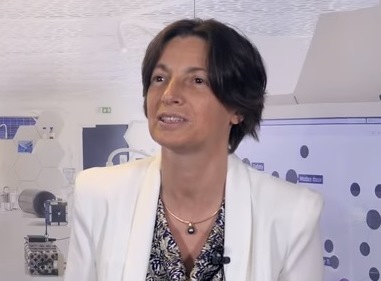
Marie Semeria Leti 2
Semeria: sends a signal to IC community
Leti CEO Marie Semeria believes the involvement of Qualcomm Technologies in the CoolCube development sends "a strong signal to the microelectronics community.”
“Together, we aim to build a complete ecosystemwith foundries, equipment suppliers, and EDA and design houses to assemble all the pieces of the puzzle and move the technology into the product-qualification phase,” said Semeria.
The companies are looking for multi-party collaboration in the programme to drive adoption of the technology.
The two organisations have been working on the technology since 2014.
Karim Arabi, vice president of engineering, Qualcomm, writes:
“The Qualcomm Technologies and Leti teams have demonstrated the potential of this technology for designing and fabricating high-density and high-performance chips for mobile devices. We are optimistic that this technology could address some of the technology scaling issues.”
A blocked or private caller withholds their name and number from Caller ID services. Retrieving a blocked caller’s ID will be difficult without going to extreme lengths such as paying for a special service or planning to take legal action. In most cases, you won’t be able to call back a blocked number. Instead, your phone company or local law enforcement agency will be the only parties that will receive a blocked caller’s information. If you are receiving many of these calls and want to stop them, you can investigate the number by using call tracing services or special smartphone applications. Or learn to block a specific or all private numbers.

1

Trace the call by dialing *57 immediately after ending a blocked or private call. This should only be done under circumstances where blocked or private calls are threatening or obscene. Your phone company will be notified of the call and will record their number and the date and time of the call. You are then expected to carry out legal action by notifying the police or any law enforcement agency about the call you traced by letting them know the date and time of the call. However, your phone company will only release the blocked or private caller's number to a law enforcement agency. A recording will play to let you know the call has been traced and is being kept in your phone company's records, as well as any further instructions on how to pursue legal action against the caller.You must answer the call for Call Trace to work. Even if the caller hangs up the moment you pick up, tracing the call is still possible as long as a connection was made.Some phone companies and law enforcers will require you to trace the call at least three times successfully before they can take action.[1]Most phone companies will charge you a small fee whether or not you choose to report the call to law enforcements. This fee can cost up to $10 per call.Call tracing should only be used for calls that are malicious, obscene, or harassing in nature.

2

Opt to add Anonymous Call Rejection to your list of phone services by picking up your receiver and dialing *77. Since it is so difficult to find a blocked caller’s ID, then it might useful for you to reject all blocked calls in the future from calling you. The feature will be activated and all anonymous, private, or blocked numbers will be rejected. To deactivate this feature, simply dial *87 and hang up.[2]Blocked callers will receive a message to hang up and unblock their number before they can successfully reach you.

3

Attempt to call back the number by dialling *69. This activates Call Return and a voice recording will provide you with the number of your last caller, the date and time of the call, and the option to call back. Call Return can only gather information from the last person that called you.[3]Unfortunately, this does not work for blocked or private calls. If the number is blocked or private, an error message will notify you that your provider could not gather data from the caller.If you have Anonymous Call Rejection activated and still receive malicious or obscene calls, you can now use Call Return to retrieve their number.This service may need to be activated by your phone company so call your provider to see if they offer Call Return services.You don't have to pick up the call to use Call Return. Some malicious callers or telemarketers will call around the same time of the day, so you can always wait for the phone to ring to the end, and then use Call Return to retrieve their information.

4

If all else fails, ask the person for their phone number or information. Request that telemarketers place you on their “Do Not Call” list. Most telemarketers need verbal confirmation to put you on their "Do Not Call" list or they will continue to call you until you either buy their services or tell them not to.It may be difficult to speak to or reason with some callers. Don't give out your personal information and don't let the phone call go beyond your comfort level. Remember, you can hang up to escape the situation.

5

Record all interactions with a blocked caller and give them to your local law enforcer. If there is a clear pattern between the phone calls you’re receiving, law enforcement will be more likely to get involved. Record dates, times, and the manner of all phone calls from the blocked number.If you choose to press charges, this can be an expensive and long lasting ordeal.Be prepared to take difficult actions such as changing your phone number to protect yourself or following instructions given to you by your law enforcement in order to trace the call. This might mean having to interact with the blocked caller or keep them on the line for an extended period of time to trace them.

Method Two of Three:
Unmasking Numbers on Your SmartphoneEdit

1

Learn about unblocking services and decide if it's right for you by visiting their websites and reading reviews. There are several unblocking services you can download on your smartphone like Trapcall and the Caller Identification App (CIA). Most of these services cost money to activate and will work on most smartphone devices. They can unmask blocked or private calls, records your calls, and help blacklist any unwanted callers.Trapcall: Trapcall is a subscription service with a number of plans that offer different features. The most basic plan will help you reveal a blocked caller’s phone number as well as other basic information associated with the number.[4]Caller Identification App: Although this service does not unmask blocked phone calls, it can help you block unwanted numbers as well as retrieve information about the caller from public databases.[5]

2

Set up your smartphone to use Trapcall or any other unmasking service app. This means downloading their app on your smartphone device by searching and installing it from your smartphone's app store. You may need to purchase the app or buy a subscription service to access their unmasking services.The service should walk you through the steps on how to set up your phone. For example, setting up Trapcall mostly consists of dialing a few numbers and hitting send. Each phone has a particular set of numbers that is specific to your phone number, carrier provider, and location, and is provided to you by Trapcall on their website. They will then ask if you'd like to test out your phone and call you with an automated number to complete the test.

3

Unmask a blocked number. Each service will have a different set of instructions on how to unmask a blocked call. Most services will require you to wait for the blocked or private caller to call you and then hit "Decline" or "Reject" on your smartphone. And a few moments later, another call or message will come in with the blocked number's ID exposed.You can either call the blocked number right away, view their information or blacklist them from being able to call you.

Electronic engineering has many subfields. This section describes some of the most popular subfields in electronic engineering; although there are engineers who focus exclusively on one subfield, there are also many who focus on a combination of subfields.
Signal processing deals with the analysis and manipulation of signals. Signals can be either analog, in which case the signal varies continuously according to the information, ordigital, in which case the signal varies according to a series of discrete values representing the information.
For analog signals, signal processing may involve the amplification and filtering of audio signals for audio equipment or the modulation and demodulation of signals fortelecommunications. For digital signals, signal processing may involve the compression, error checking and error detection of digital signals.
Telecommunications engineering deals with the transmission of information across a channel such as a co-axial cable, optical fiber or free space.
Transmissions across free space require information to be encoded in a carrier wave in order to shift the information to a carrier frequency suitable for transmission, this is known as modulation. Popular analog modulation techniques include amplitude modulation and frequency modulation. The choice of modulation affects the cost and performance of a system and these two factors must be balanced carefully by the engineer.
Once the transmission characteristics of a system are determined, telecommunication engineers design the transmitters and receivers needed for such systems. These two are sometimes combined to form a two-way communication device known as a transceiver. A key consideration in the design of transmitters is their power consumption as this is closely related to their signal strength. If the signal strength of a transmitter is insufficient the signal's information will be corrupted by noise.
Control engineering has a wide range of applications from the flight and propulsion systems of commercial airplanes to the cruise control present in many modern cars. It also plays an important role in industrial automation.
Control engineers often utilize feedback when designing control systems. For example, in a car with cruise control the vehicle's speed is continuously monitored and fed back to the system which adjusts the engine's power output accordingly. Where there is regular feedback, control theory can be used to determine how the system responds to such feedback.
Instrumentation engineering deals with the design of devices to measure physical quantities such as pressure, flow and temperature. These devices are known asinstrumentation.
The design of such instrumentation requires a good understanding of physics that often extends beyond electromagnetic theory. For example, radar guns use the Doppler effectto measure the speed of oncoming vehicles. Similarly, thermocouples use the Peltier–Seebeck effect to measure the temperature difference between two points.
Often instrumentation is not used by itself, but instead as the sensors of larger electrical systems. For example, a thermocouple might be used to help ensure a furnace's temperature remains constant. For this reason, instrumentation engineering is often viewed as the counterpart of control engineering.
Computer engineering deals with the design of computers and computer systems. This may involve the design of new computer hardware, the design of PDAs or the use of computers to control an industrial plant. Development of embedded systems—systems made for specific tasks (e.g., mobile phones)—is also included in this field. This field includes the micro controller and its applications. Computer engineers may also work on a system's software. However, the design of complex software systems is often the domain of software engineering, which is usually considered a separate discipline.
VLSI design engineering VLSI stands for very large scale integration. It deals with fabrication of ICs and various electronics components.

Typical undergraduate syllabus[edit]

Apart from electromagnetics and network theory, other items in the syllabus are particular to electronics engineering course. Electrical engineering courses have other specialisms such as machines, power generation and distribution. This list does not include the extensive engineering mathematics curriculum that is a prerequisite to a degree.[7][8]

Electromagnetics[edit]

Elements of vector calculus: divergence and curl; Gauss' and Stokes' theorems, Maxwell's equations: differential and integral forms. Wave equation, Poynting vector. Plane waves: propagation through various media; reflection and refraction; phase and group velocity; skin depth. Transmission lines: characteristic impedance; impedance transformation; Smith chart; impedance matching; pulse excitation. Waveguides: modes in rectangular waveguides; boundary conditions; cut-off frequencies; dispersion relations. Antennas: Dipole antennas; antenna arrays; radiation pattern; reciprocity theorem, antenna gain.[9][10]

Network analysis[edit]

Network graphs: matrices associated with graphs; incidence, fundamental cut set and fundamental circuit matrices. Solution methods: nodal and mesh analysis. Network theorems: superposition, Thevenin and Norton's maximum power transfer, Wye-Delta transformation.[11] Steady state sinusoidal analysis using phasors. Linear constant coefficient differential equations; time domain analysis of simple RLC circuits, Solution of network equations using Laplace transform: frequency domain analysis of RLC circuits. 2-port network parameters: driving point and transfer functions. State equations for networks.[12]

Electronic devices and circuits[edit]

Electronic devices: Energy bands in silicon, intrinsic and extrinsic silicon. Carrier transport in silicon: diffusion current, drift current, mobility, resistivity. Generation and recombination of carriers. p-n junction diode, Zener diode, tunnel diode, BJT, JFET, MOS capacitor, MOSFET, LED, p-i-n and avalanche photo diode, LASERs. Device technology: integrated circuit fabrication process, oxidation, diffusion, ion implantation, photolithography, n-tub, p-tub and twin-tub CMOS process.[13][14]
Analog circuits: Equivalent circuits (large and small-signal) of diodes, BJTs, JFETs, and MOSFETs. Simple diode circuits, clipping, clamping, rectifier. Biasing and bias stability of transistor and FET amplifiers. Amplifiers: single-and multi-stage, differential, operational, feedback and power. Analysis of amplifiers; frequency response of amplifiers. Simple op-amp circuits. Filters. Sinusoidal oscillators; criterion for oscillation; single-transistor and op-amp configurations. Function generators and wave-shaping circuits, Power supplies.[15]
Digital circuits: Boolean functions (NOT, AND, OR, XOR,...). Logic gates digital IC families (DTL, TTL, ECL, MOS, CMOS). Combinational circuits: arithmetic circuits, code converters, multiplexers and decoders. Sequential circuits: latches and flip-flops, counters and shift-registers. Sample and hold circuits, ADCs, DACs. Semiconductor memories.Microprocessor 8086: architecture, programming, memory and I/O interfacing.[16][17]

Signals and systems[edit]

Definitions and properties of Laplace transform, continuous-time and discrete-time Fourier series, continuous-time and discrete-time Fourier Transform, z-transform. Sampling theorems. Linear Time-Invariant (LTI) Systems: definitions and properties; causality, stability, impulse response, convolution, poles and zeros frequency response, group delay, phase delay. Signal transmission through LTI systems. Random signals and noise: probability, random variables, probability density function, autocorrelation, power spectral density, function analogy between vectors & functions.[18][19]

Control systems[edit]

Basic control system components; block diagrammatic description, reduction of block diagrams — Mason's rule. Open loop and closed loop (negative unity feedback) systems and stability analysis of these systems. Signal flow graphs and their use in determining transfer functions of systems; transient and steady state analysis of LTI control systems and frequency response. Analysis of steady-state disturbance rejection and noise sensitivity.
Tools and techniques for LTI control system analysis and design: root loci, Routh-Hurwitz stability criterion, Bode and Nyquist plots. Control system compensators: elements of lead and lag compensation, elements of Proportional-Integral-Derivative controller (PID). Discretization of continuous time systems using Zero-order hold (ZOH) and ADCs for digital controller implementation. Limitations of digital controllers: aliasing. State variable representation and solution of state equation of LTI control systems. Linearization of Nonlinear dynamical systems with state-space realizations in both frequency and time domains. Fundamental concepts of controllability and observability for MIMO LTI systems. State space realizations: observable and controllable canonical form. Ackermann's formula for state-feedback pole placement. Design of full order and reduced order estimators.[20][21]

Communications[edit]

Analog communication systems: amplitude and angle modulation and demodulation systems, spectral analysis of these operations, superheterodyne noise conditions.
Digital communication systems: pulse code modulation (PCM), Differential Pulse Code Modulation (DPCM), Delta modulation (DM), digital modulation schemes-amplitude, phase and frequency shift keying schemes (ASK, PSK, FSK), matched filter receivers, bandwidth consideration and probability of error calculations for these schemes, GSM,TDMA.[22][23]

Education and training

Electronics engineers typically possess an academic degree with a major in electronic engineering. The length of study for such a degree is usually three or four years and the completed degree may be designated as a Bachelor of Engineering, Bachelor of Science, Bachelor of Applied Science, or Bachelor of Technology depending upon the university. Many UK universities also offer Master of Engineering (MEng) degrees at undergraduate level.
The degree generally includes units covering physics, chemistry, mathematics, project management and specific topics in electrical engineering. Initially such topics cover most, if not all, of the subfields of electronic engineering. Students then choose to specialize in one or more subfields towards the end of the degree.
Some electronics engineers also choose to pursue a postgraduate degree such as a Master of Science (MSc), Doctor of Philosophy in Engineering (PhD), or an Engineering Doctorate (EngD). The master's degree is being introduced in some European and American Universities as a first degree and the differentiation of an engineer with graduate and postgraduate studies is often difficult. In these cases, experience is taken into account. The master's degree may consist of either research, coursework or a mixture of the two. The Doctor of Philosophy consists of a significant research component and is often viewed as the entry point to academia.
In most countries, a bachelor's degree in engineering represents the first step towards certification and the degree program itself is certified by a professional body. After completing a certified degree program the engineer must satisfy a range of requirements (including work experience requirements) before being certified. Once certified the engineer is designated the title of Professional Engineer (in the United States, Canada and South Africa), Chartered Engineer or Incorporated Engineer (in the United Kingdom, Ireland, India and Zimbabwe), Chartered Professional Engineer (in Australia and New Zealand) or European Engineer (in much of the European Union).
Fundamental to the discipline are the sciences of physics and mathematics as these help to obtain both a qualitative and quantitative description of how such systems will work. Today most engineering work involves the use of computers and it is commonplace to use computer-aided design and simulation software programs when designing electronic systems. Although most electronic engineers will understand basic circuit theory, the theories employed by engineers generally depend upon the work they do. For example,quantum mechanics and solid state physics might be relevant to an engineer working on VLSI but are largely irrelevant to engineers working with macroscopic electrical systems.


Professional bodies of note for electrical engineers include the Institute of Electrical and Electronics Engineers (IEEE) and the Institution of Electrical Engineers (IEE) (now renamed the Institution of Engineering and Technology or IET). Member of the Institution of Engineering and Technology (MIET) is recognised in Europe as Electrical and computer (technology) engineer. The IEEE claims to produce 30 percent of the world's literature in electrical/electronic engineering, has over 370,000 members, and holds more than 450 IEEE sponsored or cosponsored conferences worldwide each year.

https://en.wikipedia.org/wiki/Electronic_engineering